Food contact materials approval for packaging and kitchenware sold in Argentina
Food contact materials authorization allows packaging, films, tableware, kitchen utensils, flasks, bottles and any material that touches food to be sold in Argentina. Importers and manufacturers of these products need it even if they do not sell food. Since Decree 697/2026 it is granted and enforced by SENASA, which took over this function from the former INAL. It is filed with an RNE in the packaging category, unless the product is certified by an Annex III country.
- Agency
- SENASA
- Estimated timing
- RNE registration: up to 30 days. Packaging registration: up to 20 days. Each import authorization: up to 5 business days.
- Official fee
- $ 233.700
- Our fee
- Tailored quote
Why it is mandatory
The Food Code (Chapter IV) regulates materials that may be in contact with food. Decree 697/2026 assigned SENASA to determine permitted, prohibited or conditionally permitted materials and to evaluate packaging with components not covered (Decree 815/99, art. 13, subsections f and g).
The authorization is the approval that allows the product to be sold and remain on the market. A batch of insulated tumblers or food containers without authorization can be held or pulled from shelves, even though it contains no food.
Kitchenware and drinkware makers are often surprised by this rule. Your Argentine buyer will need a detailed specification from your factory: materials, colors, intended use, time and temperature.
What the regulation says
«10- Los envases, productos semielaborados (productos intermedios) y equipamientos plásticos destinados a estar en contacto con alimentos, deberán ser registrados por la autoridad competente. (…) 12- Los usuarios de envases y equipamientos plásticos destinados a estar en contacto con alimentos, solamente podrán usar aquellos aprobados por la autoridad competente.»Unofficial translation: “10- Plastic packaging, semi-finished products (intermediate products) and equipment intended to come into contact with food must be registered by the competent authority. (…) 12- Users of plastic packaging and equipment intended to come into contact with food may only use those approved by the competent authority.”
«Los funcionarios que durante la inspección comprueben la existencia de productos sin autorización y venta, o presuntivamente falsificados, adulterados o alterados, procederán directamente a su intervención como medida precautoria para suspender su circulación y extraerán muestras de los productos intervenidos»Unofficial translation: “Officials who, during an inspection, find products without authorization and sale, or presumably counterfeit, adulterated or altered, shall directly detain them as a precautionary measure to suspend their circulation and shall take samples of the detained products”
Rules that require it
- Ley 18.284 y Dec. 2126/1971 (Código Alimentario Argentino): General framework: every food manufactured, packed, imported or sold must comply with the CAA.
- Dec. 697/2026 (BO 03/08/2026): Concentrates in SENASA the registration, control and oversight of CAA foods and removes INAL from the National Food Control System. Recognizes previous licenses and registrations as valid without re-registration (art. 32).
- Disp. (ANMAT) 537/2025 (BO 30/01/2025): Procedure for import notice and authorization, RNE, RNPA and packaging authorization. Repeals, among others, Disp. 14023/2016, 1307/2017 and 2953/2021.
- Res. (SAGyP) 135/2026 (BO 07/08/2026): Adds to SENASA's fee schedule (SAGyP Res. 54/2026) the food fees previously charged by ANMAT, with their procedure duration.
- Dec. 35/2025 (BO 20/01/2025): Adds Annex III to Decree 2126/71: countries whose sanitary certification is recognized for imported food and packaging.
Products covered
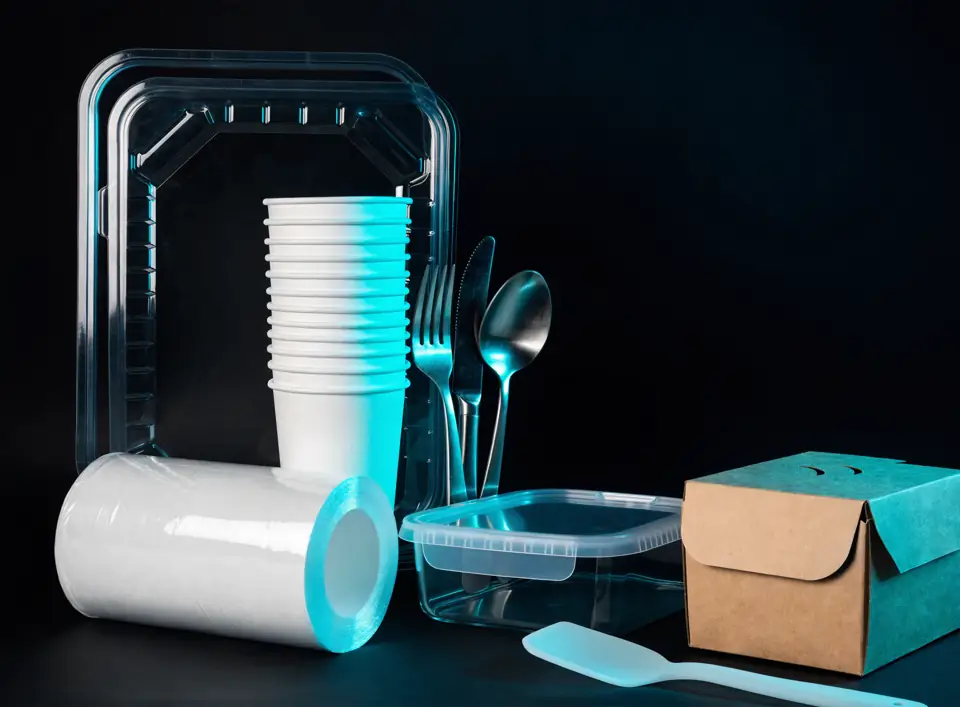
Examples of covered products:
- Plastic packaging, films, trays, bags and lids for food.
- Tableware, cups, flasks, bottles and mate gourds of any material.
- Kitchen utensils: frying pans, pots, cutlery, boards and spatulas.
- Paper, cardboard, glass, metal and elastomer packaging.
- Parts of equipment that touch food, when sold separately.
Requirements and documents
Under Disp. (ANMAT) 537/2025:
- Trade name or codes, brand or line and product type.
- Manufacturer's specification: description, parts sketch, materials, dimensions and colors.
- Type of use, time and temperature ranges and types of food it will contact.
- A label that complies with current rules.
- An RNE in the packaging category and proof of fee payment.
- Migration tests when SENASA requires them.
Official fees and timing
| Concept | Amount | Valid | Source |
|---|---|---|---|
| Packaging authorization or transfer (IC4055) | $ 233.700 | 2026 | Res. (SAGyP) 135/2026, Anexo |
| Consolidated packaging import authorization, up to 4 presentations (IC4707 A) | 1,5 % del valor FOB | 2026 | Res. (SAGyP) 135/2026, Anexo |
| Consolidated packaging import authorization, up to 4 presentations (IC4707 B) | 1,25 % del valor FOB | 2026 | Res. (SAGyP) 135/2026, Anexo |
| Overall or specific migration, per test at SENASA's laboratory (LAB4139) | $ 56.700 | 2026 | Res. (SAGyP) 135/2026, Anexo |
| Re-registration of packaging authorization | [COMPLETAR] | [COMPLETAR] | No figura en la Res. (SAGyP) 135/2026 |
According to the schedule of Disp. (ANMAT) 2978/2026, whose fees SAGyP Res. 135/2026 transferred to SENASA, the 1.5% rate applies to imports below ARS 50,000,000 and the 1.25% rate to equal or higher amounts. Migration tests at private laboratories are not official fees and are quoted separately.
Estimated timing
RNE registration: up to 30 days. Packaging registration: up to 20 days. Each import authorization: up to 5 business days.
Depends on: These are real-world times. Res. SAGyP 135/2026 sets 30 business days for packaging authorization and 2 business days for the import authorization. It depends on the material, the manufacturer's sheet declaring uses and temperatures, and whether SENASA asks for migration tests.
Our fee is quoted in writing for your case: upload your documents below and get a tailored quote.
Already have part of the documents? Upload them and get a quote.
How we handle it remotely
Classification
We split your line by material and color, which is how products are grouped for authorization.
Technical sheet
We send you the specification template for your factory to complete in English or Spanish.
Testing
If migration testing is needed, we tell you which test to request and from which laboratory.
Filing
We file the authorization, answer observations and deliver the certificate to your importer.
Shipments
With the authorization in force, each shipment goes by notice if there is Annex III certification or by import authorization if not.
Risks of not having it
- Without packaging import authorization, the goods lack the LPCO the SIM requires and are not released.
- Market withdrawal and destruction at the importer's expense if the material proves unsuitable (Disp. 537/2025).
- Sampling and seizure by SENASA in warehouses and stores (Decree 697/2026, art. 10).
- Sanctions under Law 18.284 for selling unauthorized materials.
15+ years with Argentine agencies
Food-contact packaging looks like a minor formality until a shipment is held over an incomplete material declaration. With more than 15 years handling product approvals in Argentina, we know what to request from the foreign manufacturer: composition by material, migration tests with the right simulant and, for plastics, a virgin-resin declaration. Filed complete, the registration follows the packaging through the whole chain.
Frequently asked questions
Is authorization needed if no food is sold?
Yes. The obligation falls on the product that will touch food, not on the importer's line of business. Tumblers, flasks, food containers, frying pans or tableware need an RNE in the packaging category and an authorization for each product line, unless they are certified by an Annex III country under Decree 35/2025.
How much does packaging authorization cost?
SENASA's fee for packaging authorization or transfer is ARS 233,700 in 2026 (IC4055, SAGyP Res. 135/2026). Each consolidated import also pays 1.5% or 1.25% of the FOB value depending on the bracket. Migration tests at private laboratories are quoted separately.
Do raw materials for making packaging need intervention?
According to the FAQ published by the former INAL's foreign trade area, raw materials for making packaging do not require intervention. That criterion predates Decree 697/2026, so we confirm it with SENASA for your specific tariff code and product before the goods are shipped to Argentina.
Is each color or size a separate authorization?
Products are grouped by line of the same material and color. A size change within the same line can usually be declared together; a different material or color cannot. We review your full catalog to build the fewest presentations possible.
Is an authorization issued by INAL still valid?
Yes. Art. 32 of Decree 697/2026 recognizes as valid, without re-registration, packaging registrations that moved from the former INAL to SENASA. Transfers, modifications and new authorizations are now filed with SENASA and paid under its fee schedule, so plan any change with the new agency in mind.
Related procedures
RNE: establishment registration
The RNE (National Establishment Registry) is the registration of the importing company and of each warehouse where food or packaging is stored.
SENASAImport notice (Annex III)
The food import notice is a sworn statement that replaces the prior RNE and RNPA when the product has a certificate of free sale from a country in Annex III of Decree …
SENASAFood import authorization
Food import authorization is SENASA's (formerly INAL) intervention for each shipment of food, inputs or packaging that is not certified by an Annex III country under D…
Get a tailored quote for food contact materials
If you already have experience and want a competitive quote to compare, or to optimize costs and timing, send us your background documents and we quote with priority.
- 1Upload your documents and tell us about the product.
- 2We review them against the regulation that applies.
- 3You receive a written quote and, if something is missing, the exact list.
- 15+ years with Argentine agencies
- Fully remote, nationwide
- Official fees published with source
- Reply within 6 hours
- Experience with every agency
Quick question instead?